Dasha Mahavidya / दस महाविद्या
The Ten Faces of the Divine Mother
In the secret language of Tantra, the Dasha Mahavidyas are the ten great Wisdom Goddesses—the mysterious faces of Adi Shakti, the primordial Divine Mother.
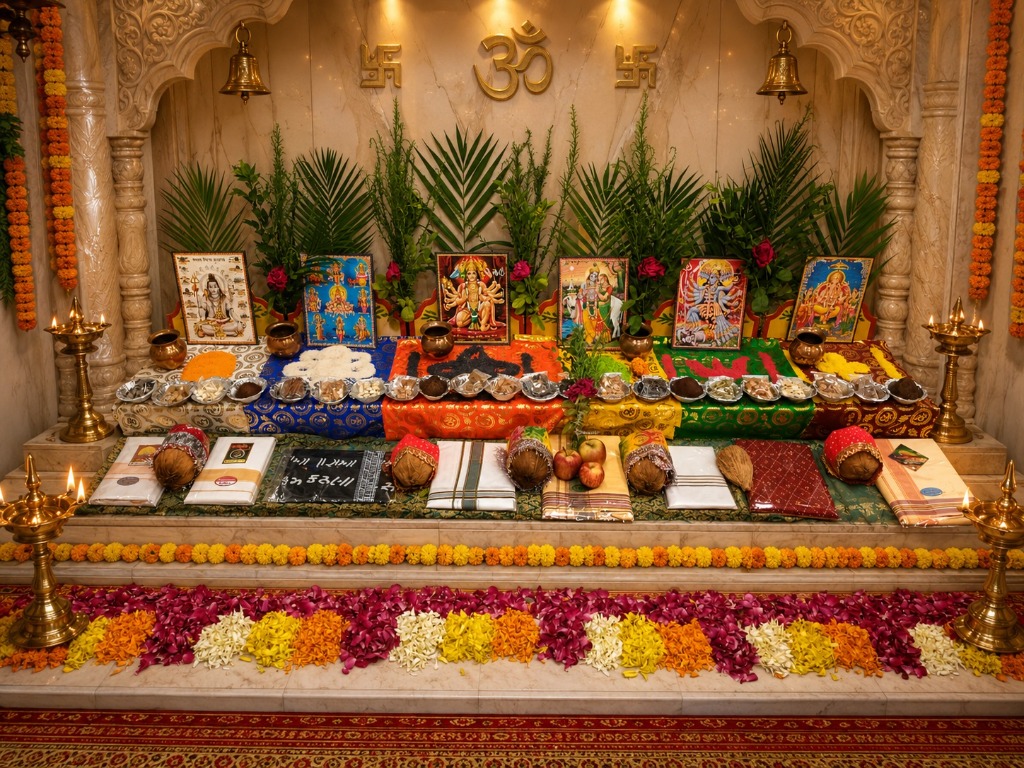
Adi Shakti / आद्या शक्ति
She is One, Yet Appears as Ten
A widely shared Shakta understanding presents the Mahavidyas as ten manifestations of the one Goddess, each expressing a distinct mode of divine power and wisdom. They are understood through a rich body of traditional teachings, hymns, practices and narratives that describe their emergence, qualities and relationship to Shiva and Shakti.
Beyond All Dualities
She is One, yet appears as ten: creation and dissolution, beauty and terror, abundance and emptiness, life and death. The Mahavidyas illuminate the journey beyond ordinary divisions—pure and impure, beautiful and terrible, sacred and ordinary.
The Mirror of Fearlessness
Their fierce forms become mirrors for confronting fear, attachment and impermanence. The cremation ground, darkness and death are not approached merely as frightening realities, but as gateways to discover the One Consciousness beyond all opposites.
“Each Mahavidya opens a different doorway into that primordial mystery.”
Tantric Sadhana / तांत्रिक साधना
Beginning the Journey: Invoking the Ten Mahavidyas
In Tantra, the Mahavidyas are not merely contemplated as philosophical ideas. They are worshipped and invoked as living manifestations of Shakti through traditional Tantric practices.
Depending on the lineage and the particular Mahavidya, the practitioner may undertake mantra japa, puja, yantra meditation, offerings, visualization and havan (fire ritual). Through these sacred practices, the seeker invokes the specific energy and consciousness represented by the Goddess.
The purpose, however, is deeper than asking for worldly fulfilment. The invocation is intended to establish a connection with the particular Shakti—to awaken within the practitioner the qualities represented by that Mahavidya.
Thus, one may invoke Kali for the dissolution of fear and ego, Tara for protection and guidance, Tripura Sundari for the transformation of desire and perception, Bhairavi for inner fire and discipline, Dhumavati for wisdom through impermanence, and the other Mahavidyas according to their particular energies.
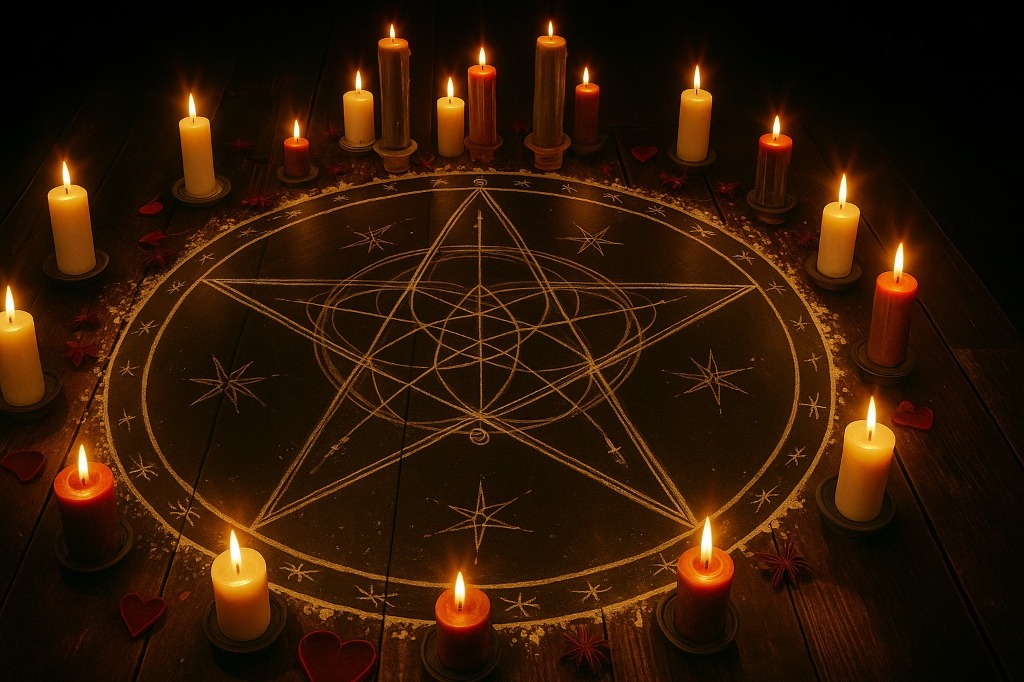
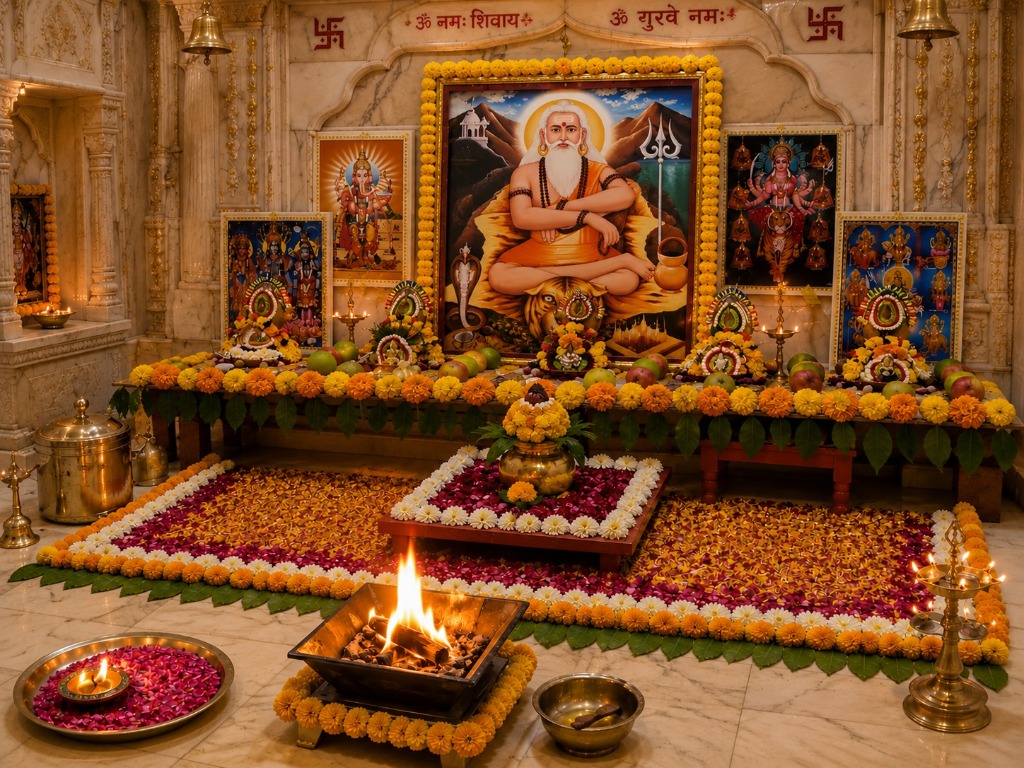
The Essential Need for Guru Protection
In Aghor and deeper Tantric paths, worship deliberately confronts death, fear, attachment, impermanence and darkness—not for darkness’s sake, but to discover the Divine Consciousness within all things.
Because these practices involve powerful mantras and energies, traditional Tantric lineages place paramount importance on initiation and Guru protection. Powerful Mahavidya practices should not be undertaken independently, but only under the direct guidance and protection of a qualified Guru.
The Ten Doors / दस द्वार
The Ten Sacred Energies of Adi Shakti
The one primordial Shakti manifests herself in the ten distinct energies. Explore each divine form:
01
काली
Maa Kali
The Darkness Beyond Time
Maa Kali is primordial Shakti, the power of Time itself. Dark as the infinite void, She devours names, forms, fears and illusions. Her sword severs the ego; her terrible beauty destroys ignorance.
02
तारा
Maa Tara
She Who Carries Us Across
Maa Tara is the compassionate Mother who carries the soul across the ocean of existence. She is the sacred sound in darkness, the wisdom that guides the lost and the Mother who protects through fear and uncertainty.
03
त्रिपुर सुंदरी
Maa Tripura Sundari
The Beauty of the Three Worlds
Tripura Sundari is the supreme beauty of the three worlds—the radiance of consciousness itself. At the heart of Sri Vidya, She reveals the harmony underlying creation.
04
भुवनेश्वरी
Maa Bhuvaneshwari
The Infinite Space of Creation
Maa Bhuvaneshwari is the Mother of the universe, the infinite space in which every world and being appears. She is the cosmic womb, vast enough to contain the sacred and seemingly profane, the beautiful and the terrible.
05
भैरवी
Maa Bhairavi
The Fire of Awakening
Maa Bhairavi is the sacred fire of transformation. Fierce and uncompromising, She represents tapas—the inner fire through which ignorance, attachment and weakness are transformed.
06
छिन्नमस्ता
Maa Chhinnamasta
The Mystery of Surrender
Maa Chhinnamasta stands at the threshold between life and death, desire and renunciation, self and Self. Holding her severed head while her life force nourishes others, She embodies the radical surrender of ego.
07
धूमावती
Maa Dhumavati
The Wisdom of the Void
Maa Dhumavati is the Mother who appears when everything familiar has fallen away. She is smoke after fire, silence after sound and emptiness after attachment.
08
बगलामुखी
Maa Bagalamukhi
The Power of Stillness
Maa Bagalamukhi possesses the mysterious power to still speech, movement and destructive forces. Her energy, Stambhana, brings turbulence to rest.
09
मातंगी
Maa Matangi
The Secret Wisdom of Sound
Maa Matangi is the goddess of sacred speech, music, creativity and mystical knowledge. She reveals the power of sound—the vibration through which consciousness becomes expression.
10
कमला
Maa Kamala
The Lotus of Divine Abundance
Maa Kamala is the radiant lotus of the Mahavidyas, the flowering of divine consciousness within the world. Closely associated with Lakshmi, She embodies prosperity, beauty, fertility and abundance.
Ultimate Truth / परम सत्य
One Mother. Ten Mysteries.
Having encountered the ten forms, the seeker returns to the truth with which the journey began: the Dasha Mahavidyas are ten forms, mysteries and doorways—but the Shakti is One.
Their significance lies in dissolving duality. The seeker learns to recognise the same Divine Consciousness in light and darkness, life and death, purity and impurity, creation and dissolution.
This is the deeper mystery gathered through all ten forms:
“Nothing is outside Her.”
✦ The cremation ground and the temple
✦ The terrifying and the beautiful
✦ The beginning and the end
✦ The known and the unknown
All are held within the infinite embrace of Shakti.
The journey is ultimately the journey from seeing these as opposites to recognising the One Reality shining through them all. Through worship, mantra and havan, the seeker does not merely call upon the Goddess—the deeper purpose is to awaken the Goddess within consciousness itself.